


Move People
4.22.71K Reviews
App Specs
- Version
- 8.0
- Updated On
- License
- Free
- Downloads
- 100,000,000+
- Developer
- Supersonic Studios LTD
- Categories
- Simulation
- Platform
- Android, iOS
Screenshots
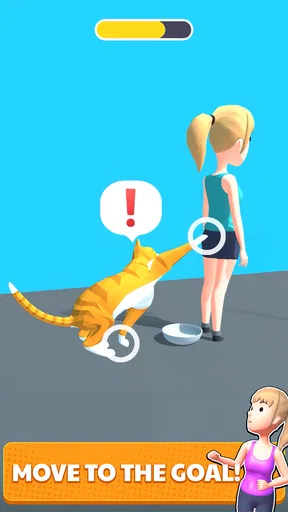
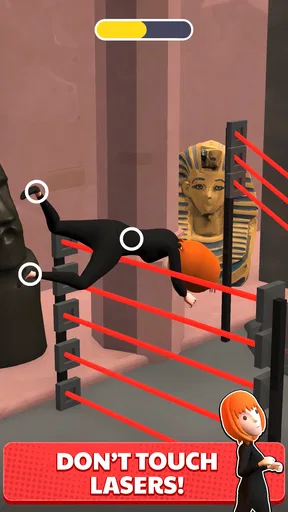

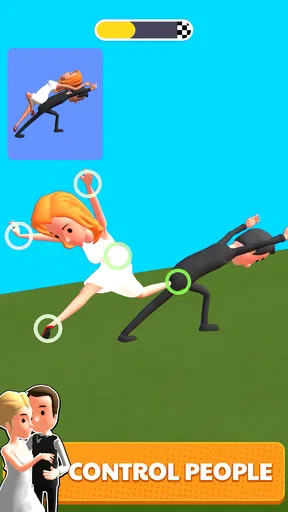
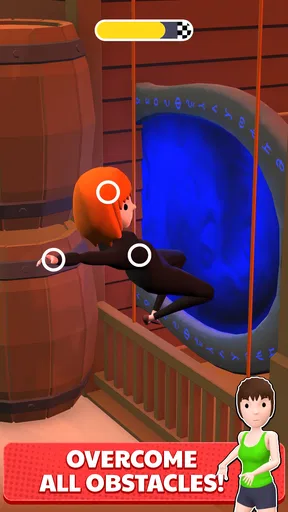
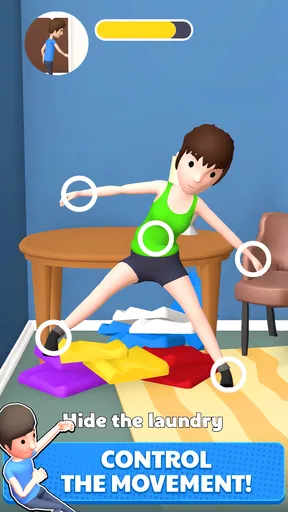
 Analysis by AppCompare
I first reach for Move People when I want a game that asks for a little attention without demanding that I settle in for a long session. Its appeal is easy to understand: I guide characters into poses that fit the situation, and the fun comes from working out how a small adjustment can make the scene click. That simple idea gives the game a playful, slightly silly mood rather than the pressure of a serious simulation.
It suits the in-between parts of a day: a short break, a quiet commute, or a few minutes while I wait for coffee. I wouldn’t choose it when I’m looking for a deep story, a complex management system, or a game that rewards long-term planning. But when I want a quick puzzle with a visual punchline, it has a clear place on my phone.
A small puzzle for spare moments
The best way to approach each scene is to look at the character’s whole posture before dragging anything. I try to identify what the pose is communicating, then make deliberate adjustments instead of moving every limb at random. That little pause helps me understand the task and can save a few frustrating corrections when a movement doesn’t land as expected.
Guides and Analysis on Move People
This is also where the controls shape the experience. Moving limbs and adjusting posture feels direct in concept, but the touch interaction can occasionally be fussy. I’ve found it more comfortable to make one change at a time, check the result, and then continue. That method is slower than swiping around, but it gives me a clearer sense of which adjustment helped and makes the solution feel earned.
Who will enjoy the tone
I’d recommend it to someone who enjoys light, visual puzzles and doesn’t mind learning a level through trial and adjustment. The playful situations make it approachable even if you don’t usually play simulation games, and the short bursts suit people who want to stop after a level without losing track of a complicated plot. The game’s Teen content rating is useful context for families deciding whether its tone is a fit.
On the other hand, I’d point a player who wants precise controls, elaborate progression, or a story with substantial character development toward another kind of game. This one’s pleasure is in the immediate puzzle and the amusing pose, not in building a long campaign or mastering a large set of systems. If repeated small challenges feel more like busywork than relaxation to you, its central loop may wear thin.
How it sits among simulation games
Many simulation games focus on running a business, managing resources, or shaping a larger world over time. This one takes a much smaller, more physical angle: I’m working with a character’s body and the scene in front of me. Compared with a conventional logic puzzle, its answer is also expressed through a pose rather than a sequence of abstract symbols. That makes it more visual and comic, though less suited to players who want a rigorous puzzle with one clearly explained chain of reasoning.
Worth Reading Before You Choose

Google Calendar Makes a Crowded Week Easier to Manage

Ludo King Makes the Most of the Minutes Between Plans

Baby Panda World Brings Quick Play to Modern Phones, but Its Game Library Feels Busy

ESPN’s Live Game View Makes Following Close Games Easier

QuizzLand Review: A Good Fit for Short Trivia Breaks, Not Every Player

Basketball Stars: Multiplayer Is Fast, but Can It Recover When Matches Go Wrong?
It is free to start, while in-app purchases range from $2.99 to $4.99 per item. I’d treat spending as optional rather than a requirement for deciding whether the core idea works for you: play a few levels, see whether the touch controls and humor fit your taste, and only then consider whether you want anything extra. The game is at version 6.1, and its Android minimum requirement is 7.0, details worth checking against an older device before installing.
Where the rhythm can stumble
The short-level format is convenient, but it also means the game depends on each individual scenario being satisfying. If a pose is unclear or a touch doesn’t register quite as I intended, the pause between understanding the joke and getting the character into place can interrupt the otherwise breezy rhythm. I recommend changing one limb at a time and watching how the scene responds; it’s a practical way to distinguish a puzzle problem from a control problem.
For a realistic everyday example, I might open it during a few spare minutes before meeting a friend. I can try a level, make a couple of careful adjustments, and stop when I’m ready to put the phone away. If I’m in a hurry or already annoyed by imprecise touch controls, though, I’d choose something less dependent on dragging body parts into an exact position. The right mood matters as much as the available time.
Why its modest scope works—and where it doesn’t
The game’s most useful strength is that its premise is instantly legible: I don’t need to study a manual or remember a set of systems before I can take part. That simplicity helps it work as a casual distraction, but it also sets a limit. Players who finish the available scenarios quickly may wish for more variety, and anyone expecting the changing settings to become a deep simulation may be disappointed. I see it as a collection of playful problems, not a world that keeps unfolding through complex mechanics.
That distinction can help you decide whether to install it. If you like visual humor, short challenges, and experimenting with poses, its narrow focus is a benefit. If you mainly want a lengthy progression path, highly exact input, or a simulation built around managing a living environment, a different game will probably be a better fit. I’d also avoid treating a tricky level as a test of speed; stopping to inspect the pose is more useful than making lots of quick gestures.
There’s a practical question about whether it works for casual players: in my view, yes, because the basic task is easy to grasp and the levels are designed for brief play. The more important question is whether its particular kind of trial and error feels amusing to you. If you enjoy seeing a funny scene come together, small setbacks are part of the appeal; if you need every touch to produce a predictable result, they can become the main irritation.
First Impressions and Gameplay
Jumping into Move People is like stepping into a whimsical world where you’re in charge of guiding characters through various scenarios. The moment you open the app, you're greeted with vibrant colors and quirky characters that instantly draw you in. It’s almost like they’re saying, “Hey, let’s have some fun!”
The gameplay itself is straightforward, which is part of its charm. You’re tasked with moving limbs and adjusting postures to solve puzzles. It sounds simple, right? But trust me, it’s one of those deceptively simple games. The catch is ensuring the characters get into the right pose to complete each level. It’s like a digital version of those wooden poseable figures artists use, but much more entertaining.
Visuals and Soundtrack
The visuals are bright and inviting, making it a treat for the eyes. Each character and setting has a unique charm, and the developers did a fantastic job keeping everything playful and engaging. The soundtrack complements this vibe perfectly. It’s upbeat and adds an extra layer of enjoyment to the gaming experience. You’ll find yourself bopping along to the music as you maneuver your characters into position.
Levels and Challenges
As you progress, the levels do get trickier, which keeps things interesting. The challenges aren’t just about moving a hand or leg; sometimes, they require a bit more thought and creativity. It’s super satisfying when you finally nail that tricky pose. The variety in scenarios—from dance floors to everyday situations—keeps you guessing what’s coming next.
There’s a slight learning curve, but nothing that’ll make you want to throw your phone across the room. It’s more about honing your skills and thinking outside the box. Trust me, once you get the hang of it, you’ll be hooked.
What Keeps You Coming Back?
For me, Move People is one of those games you keep on your phone for those moments when you need a quick mental break. The levels are short enough to play in bursts, which is perfect for waiting in line or during a coffee break. Plus, there’s a sense of accomplishment every time you complete a level. It’s like a little pat on the back that keeps you coming back for more.
The game also has a way of making you laugh. Some of the poses and situations are downright hilarious, and it’s hard not to smile as you play. It’s these little moments of joy that make it worth revisiting.
Any Room for Improvement?
While Move People is a lot of fun, there are a few tweaks that could make it even better. Occasionally, the controls can feel a bit finicky. There were times when I struggled to get the characters to do exactly what I wanted, which can be a tad frustrating. A bit of fine-tuning in this area would enhance the overall experience.
Additionally, more levels and scenarios would be a welcome addition. The game is so enjoyable that you’ll find yourself wishing for more once you’ve worked through the current offerings.
Final Thoughts
In a world filled with complex games that demand hours of your time, Move People is a refreshing change. It’s lighthearted, fun, and offers just the right amount of challenge to keep you engaged. Whether you’re a casual gamer or someone looking for a quick distraction, this game is worth checking out.
So, if you haven’t already, give Move People a whirl. It might just become your new go-to game for those moments when you need a bit of light entertainment in your day. And hey, who doesn’t need more laughter in their life, right?
A little context before you download
Supersonic Studios LTD developed this free simulation game, which has an average rating of 4.3 from around 317,000 ratings and more than 2,700 written reviews. It has passed 100 million installs, so it has clearly found a broad audience for its simple, pose-based puzzles. Those figures don’t guarantee that its hands-on controls will suit everyone, but they do suggest the idea is easy for many players to pick up.
It was released on June 26, 2021, and the current version is 6.1. For Android, the stated minimum operating system is 7.0. I’d check that requirement before downloading on an older device, especially if you’re installing it for someone else. On iOS, I’d check compatibility in the relevant app store before making plans around a particular phone or tablet.
Finding the right way to play
I get the most out of a level when I treat it as a little visual riddle rather than a reflex challenge. First I look at the surrounding situation, then I ask what the character seems meant to be doing. After that, I make small changes and reassess. This approach is especially handy when a pose looks almost right: large, hurried movements can take me away from a workable position, while measured adjustments help me notice what the scene is asking for.
The same approach makes the game a decent choice for sharing a casual moment with someone nearby. One person can suggest a pose while the other handles the touch controls, then you can compare ideas when the result appears. I wouldn’t present it as a deep cooperative game, but its visual problem-solving gives people something immediate to react to without needing to learn a complicated rule set.
It can also work as a palate cleanser between more demanding games. I’m not asked to keep track of a sprawling map or remember a chain of upgrades; I can focus on the current character and scene. That narrow focus is precisely why I’d choose it for a short pause, while choosing a richer simulation when I want to build, manage, or steadily improve something over a longer session.
The mood is the point, not a promise of depth
The bright presentation and upbeat music support the same light tone as the comic poses. Together, they make a level feel more like a small playful performance than a serious test. I like that coherence: the visuals, sound, and physical puzzle all point in the same direction. It also explains why the game works best when I’m willing to enjoy the odd result along the way, rather than treating every awkward attempt as a failure.
That mood won’t erase the occasional friction. A touch-based pose puzzle needs the character to respond in a way that feels understandable, and a finicky adjustment can make the solution less satisfying. If that happens, I slow down, change one part, and judge the whole silhouette again. If the controls still feel like the obstacle rather than the puzzle, I take that as a sign to switch to a game with more forgiving input rather than forcing a longer session.
My recommendation in one situation
If a friend asked me what to try while waiting for a takeaway order or filling a quiet gap at home, I’d suggest giving it a few levels. Its low-pressure structure, colorful scenes, and amusing poses make it easy to sample, and the free entry point means there’s no purchase required just to find out whether the central idea appeals. I’d be clear that optional in-app purchases are available, and that the game’s appeal rests more on its individual scenarios than on deep progression.
My recommendation is therefore specific: choose it for brief, cheerful puzzle play, especially if you enjoy moving characters around and interpreting a scene. Skip it if exact touch control is essential to your enjoyment, if you want a long-form simulation, or if you prefer puzzles that explain every answer through a strict sequence of clues. For the right player, its small scale is not a weakness to overcome; it is what makes the game an easy, upbeat companion for spare minutes.
Pros
- Intuitive controls make gameplay easy.
- Diverse levels keep the game engaging.
- Colorful graphics enhance the experience.
- Minimal ads for uninterrupted play.
- Small download size saves device space.
Cons
- Limited character customization options.
- Repetitive music can become annoying.
- Requires internet for some features.
- Occasional lag on older devices.
- In-app purchases can be pricey.
FAQs for Move People
What is Move People and how does it work?
Move People is a fun and interactive puzzle game where players manipulate characters to complete various tasks or reach specific goals. The game involves strategic thinking to solve puzzles by moving and arranging people in the right order. Each level presents a unique challenge that requires players to think creatively.
Is Move People a free-to-play game, or does it require in-app purchases?
Move People is free to download and play, offering a wide range of levels without any cost. However, the game does feature in-app purchases that provide additional content, hints, or power-ups. These purchases are optional and designed to enhance the gaming experience without limiting free gameplay.
What platforms is Move People available on?
Move People is available on both Android and iOS platforms, making it accessible to a wide audience. Players can find the game in the Google Play Store for Android devices and the Apple App Store for iOS devices, ensuring compatibility with most smartphones and tablets.
Are there any age restrictions for playing Move People?
Move People is designed for players of all ages, featuring content that is family-friendly and suitable for children and adults alike. The puzzles range from simple to moderately challenging, making it a great game for family members to enjoy together. Parents can feel confident allowing their children to play.
Does Move People require an internet connection to play?
Move People can be played offline, which is perfect for users who want to enjoy the game without needing a constant internet connection. However, some features, such as downloading additional levels or accessing updates, may require an internet connection from time to time.


